
Spade Flanges Manufacturer in Mumbai
Introduction
Sk Steel Corporation is India’s Best Mild Steel Flange Manufacturer in Mumbai; we are also known as a carbon steel flange and Pipe Fittings Manufacturer. With a rich legacy of excellence spanning several decades, we take immense pride in being a trusted name in the industry. Our commitment to quality and customer satisfaction has earned us acclaim from clients across India and beyond.
In industrial piping systems, controlling the flow and isolating pipelines safely is very important. Spade flanges are widely used for positive isolation in pipelines, process plants, refineries, chemical industries, oil and gas facilities, and other industrial applications. Choosing the right manufacturer is essential because flange quality directly affects the safety, reliability, and performance of the piping system.
maintenance, and efficient operation. Spade Flanges are widely used when a pipeline needs to be positively isolated during maintenance, inspection, or shutdown activities. Choosing a reliable Spade Flanges Manufacturer in Mumbai helps industries get properly engineered products that provide dependable performance in demanding environments.
SK Steel Corporation is a trusted supplier and manufacturer of industrial flanges, offering quality-oriented solutions for different piping requirements. With a focus on dimensional accuracy, material quality, and customer requirements, the company serves industries that require reliable flange solutions for their piping systems. We are the best Spade Flanges Supplier.
What Are Spade Flanges
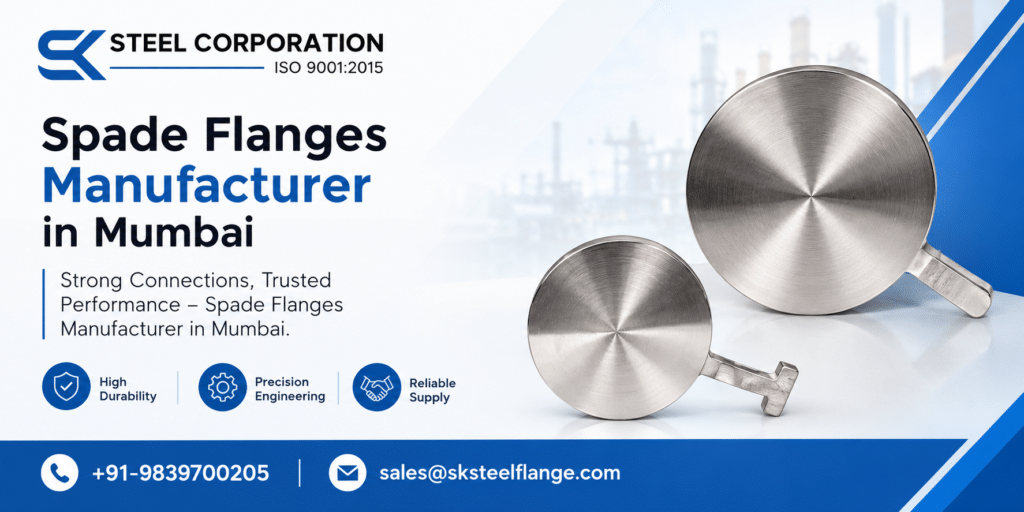
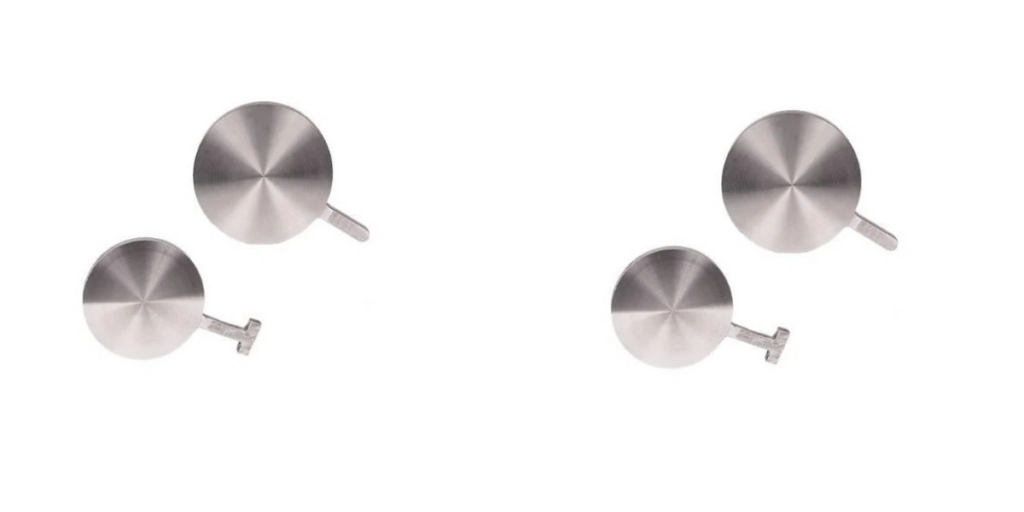
A Spade Flange, also known as a line blind or paddle blind in certain applications, is a solid metal plate installed between pipe flanges to completely stop the flow of fluid or gas through a pipeline. Unlike a valve, a spade provides a physical barrier and is commonly selected when positive isolation is required.
Spade flanges are particularly useful during plant maintenance because workers can visually identify whether a pipeline has been isolated. They can be installed between mating flanges using suitable gaskets and bolting arrangements. The design and thickness of a spade depend on factors such as pipe size, pressure rating, temperature, fluid type, and applicable standards. We are the best Spade Flanges Exporter.
Why Are Spade Flanges Important
Industrial pipelines often carry water, steam, chemicals, gases, petroleum products, and other process fluids. During maintenance, simply closing a valve may not always provide the level of isolation required. Unlike a valve, a spade flange provides a visible and physical method of pipeline isolation. This makes it useful during maintenance and safety-related operations.
- Positive pipeline isolation
- Maintenance and repair work
- Equipment shutdown
- Pressure testing
- Pipeline inspection
- Temporary flow blockage
- Separation of pipeline sections
The correct spade flange should always be selected according to the pipeline size, pressure class, material, temperature, flange facing, and application. A spade flange provides a physical barrier inside the pipeline. This helps maintenance teams work with greater confidence and reduces the possibility of accidental flow.
Types of Spade Flanges
1. Carbon Steel Spade Flanges
Carbon steel spade flanges are widely selected for general industrial piping because they provide good mechanical strength and are economical. They are suitable for applications involving water, oil, gas, steam, compressed air, and other compatible industrial fluids.
Common carbon steel grades include ASTM A105 and other specified carbon-steel grades. These spade flanges can be manufactured in different pressure classes and facing configurations according to the project requirements. Carbon steel paddle blanks are commonly supplied for industrial pipeline isolation.
2. Stainless Steel Spade Flanges
Stainless steel spade flanges are preferred when corrosion resistance is an important requirement. They are commonly used in chemical processing, food processing, pharmaceutical plants, water treatment, petrochemical systems, and other environments where ordinary carbon steel may not provide sufficient resistance.
Common stainless-steel grades include SS 304, SS 304L, SS 316, and SS 316L. The appropriate grade should be selected according to the fluid, temperature, chloride exposure, and operating environment.
3. Alloy Steel Spade Flanges
Alloy steel spade flanges are designed for demanding temperature and pressure conditions. Alloy additions improve the material’s mechanical properties and make these flanges suitable for selected power-generation, refinery, petrochemical, and process-piping applications.
The exact alloy grade should be selected according to the engineering specification, operating temperature, pressure, and applicable material standard.
4. Duplex Steel Spade Flanges
Duplex steel spade flanges combine useful mechanical strength with strong corrosion resistance. They can be considered for demanding environments where both corrosion resistance and structural performance are important.
Duplex and super duplex materials are available for specialised spade and paddle-blind requirements. These are generally used in chemical plants, petrochemical equipment, marine systems, heat-treatment facilities, and specialised process industries.
5. Super Duplex Spade Flanges
Super duplex spade flanges are used for highly demanding corrosion-service applications. They are particularly relevant to offshore, marine, chemical, desalination, and oil-and-gas installations where the piping system may experience aggressive environments.
Because super duplex materials have specific welding, machining, and heat-treatment requirements, buyers should provide the complete project material specification before ordering.
Applications of Spade Flanges
1. Oil and Gas Industry
One of the major applications of spade flanges is in the oil and gas industry. Refineries, gas processing plants, crude oil pipelines, and petroleum facilities contain numerous process lines that require safe isolation during inspection and maintenance.
A spade flange can be inserted between mating flanges to create a solid barrier across the pipe bore. This helps isolate sections of a pipeline before maintenance activities begin. Spade-and-spacer arrangements are also used in larger lines where handling the weight of a single spectacle blind can be difficult.
2. Petrochemical Plants
Petrochemical facilities operate with hydrocarbons, chemicals, solvents, and other process fluids under demanding conditions. During shutdowns or equipment servicing, specific sections of the piping system may need to be physically isolated.
Spade flanges provide a practical solution for these isolation points. They can be manufactured from suitable carbon steel, stainless steel, alloy steel, duplex, and other materials depending on the process conditions.
3. Chemical Processing Plants
Chemical plants often handle corrosive or hazardous liquids and gases. Proper isolation is therefore essential before opening equipment, replacing components, or carrying out maintenance.
A properly selected spade flange provides a positive mechanical barrier between connected sections of piping. Material selection is particularly important in these applications because the flange must be compatible with the chemical being transported, operating temperature, and pressure.
4. Power Generation Plants
Spade flanges are also used in thermal power plants, gas-based power plants, and other power-generation facilities. Steam, condensate, cooling water, fuel, and other process lines may require isolation during planned maintenance.
They can be used around boilers, heat exchangers, pumps, turbines, condensate systems, and auxiliary piping where a physical line blank is required.
5. Refineries
Refineries have extensive networks of interconnected piping. During plant turnarounds, maintenance teams may need to isolate individual lines, vessels, heat exchangers, pumps, and other equipment.
Spade flanges allow maintenance personnel to establish a clearly identifiable physical isolation point. Unlike simply closing a valve, a solid spade provides a metal barrier across the pipe bore when correctly installed.
6. Pipeline Maintenance
Pipeline systems may require temporary isolation for inspection, repair, modification, or replacement work. Spade flanges can be installed between suitable flange connections to stop the flow through a particular pipeline section.
They are useful when the pipeline needs to remain safely isolated for an extended maintenance period. The protruding handle or tab also helps personnel identify and handle the spade during installation and removal.
7. Marine and Offshore Applications
Offshore platforms and marine processing systems contain numerous oil, gas, water, and utility pipelines. Space, corrosion resistance, safety, and reliability are important considerations in these environments.
Spade flanges made from stainless steel, duplex stainless steel, or other corrosion-resistant materials can be selected according to the application. They can be used for isolating process lines, utility lines, and equipment during maintenance activities.
8. Water Treatment Plants
Large water treatment and wastewater treatment facilities use extensive piping networks for water transfer, filtration, chemical dosing, sludge handling, and other processes.
Spade flanges can be used to isolate particular sections of these systems when pumps, valves, filters, tanks, or pipelines require servicing. They are especially useful for applications where reliable physical separation is required.
9. Pressure Testing and Commissioning
Spade flanges are also useful during pipeline pressure testing and commissioning. Specific sections of a piping system can be isolated while other sections remain under different operating or testing conditions.
Their solid construction makes them suitable for applications where the line blank needs to withstand the specified pressure and operating conditions. Correct sizing, pressure rating, material, gasket selection, and installation are essential.
10. Chemical and Process Manifolds
Process manifolds often have several interconnected lines. During maintenance, one line may need to be isolated while other lines remain operational.
Spade flanges can be installed at selected flange joints to physically separate the required section. This makes them useful for complex piping arrangements in chemical, petrochemical, and process industries.
Benefits of Using Spade Flanges
1. Positive Pipeline Isolation
One of the biggest benefits of spade flanges is their ability to provide positive mechanical isolation. Unlike a valve that can potentially leak through its seat, a properly installed solid spade physically blocks the pipeline. This makes spade flanges useful when maintenance teams need a clearly defined isolation point before working on downstream equipment.
2. Improved Maintenance Safety
Safety is a major consideration in oil & gas, petrochemical, chemical, refinery, and power-generation facilities. A spade flange provides a visible physical barrier between sections of a piping system. This helps maintenance personnel identify that a particular line has been isolated before repair or inspection work begins.
3. Easy Identification of Isolation Status
Spade and spacer systems offer a simple visual method for identifying whether a pipeline is isolated or available for service. This can reduce confusion during plant shutdowns and maintenance activities, particularly where multiple pipelines are operating in the same area.
4. Suitable for High-Pressure Applications
Industrial piping systems can operate under demanding pressure conditions. Properly designed and manufactured spade flanges can be produced for different pressure classes and application requirements. ASME B16.48 products, for example, are available across multiple pressure classes, depending on the manufacturer and specification.
5. Strong and Durable Construction
A quality Spade Flanges Manufacturer in Mumbai can manufacture spades from materials selected according to the operating environment. Common material choices include carbon steel, stainless steel, alloy steel, duplex steel, super duplex steel, nickel alloys, and other special alloys.
The correct material helps the spade withstand mechanical loads, pressure, temperature, and corrosion conditions associated with the process line.
6. Reduced Maintenance Risk
Spade flanges provide a straightforward isolation method. Once installed correctly between mating flanges, the solid plate blocks the passage through the pipeline. This can make maintenance planning easier because the isolation point is physically identifiable and does not depend only on valve position.
7. Long Service Life
High-quality raw materials, accurate machining, correct thickness, and proper dimensional control contribute to a longer working life. For demanding industrial applications, manufacturers may also provide inspection and material documentation to support quality and traceability requirements.
8. Custom Manufacturing Options
Different piping projects can require different sizes, thicknesses, materials, pressure ratings, and flange configurations. A professional manufacturer can produce spade flanges according to project drawings and technical specifications rather than limiting buyers to only standard stock products. Custom manufacturing is particularly useful for specialised process plants and replacement requirements.
9. Corrosion-Resistant Material Choices
Pipelines handling chemicals, seawater, aggressive fluids, or corrosive gases may require specialised materials. Stainless steel, duplex, super duplex, nickel alloys, and other corrosion-resistant grades can be selected according to the service conditions. This helps improve reliability where ordinary carbon steel may not provide sufficient corrosion resistance.
How to Select the Right Spade Flange
Before ordering from a Spade Flanges Manufacturer in Mumbai, buyers should consider several technical factors.
Pipeline Size: The flange or spade must match the nominal pipe size.
Pressure Rating: Select the appropriate pressure class according to the operating conditions.
Material: The material should be compatible with the process fluid and operating environment.
Temperature: Operating temperature can affect material performance and sealing requirements.
Flange Facing: Raised face, flat face, ring-type joint, or another configuration should be selected according to the piping system.
Thickness: The spade thickness should be appropriate for the required pressure and application.
Standards: Products should be manufactured according to the applicable project or industry standards.
Dimensions: Accurate dimensions are essential for proper installation and alignment.
Providing complete technical details to the manufacturer can help avoid incorrect product selection.
Why Choose SK Steel Corporation
1. High-Quality Manufacturing
A reliable manufacturer focuses on material quality, dimensional accuracy, and consistent production. Spade flanges can be manufactured from materials such as carbon steel, stainless steel, alloy steel, duplex steel, and nickel alloys depending on the application.
2. Compliance with Industry Standards
Industrial piping components must meet the required standards and dimensions. Established manufacturers can supply spade and paddle-blind products according to standards such as ASME B16.48, ASME B16.5, ANSI, DIN, EN, BS, and JIS, depending on project requirements.
3. Better Dimensional Accuracy
Correct thickness, outer diameter, bolt-hole arrangement, and flange dimensions are essential for proper installation. Professional manufacturers use inspection processes to maintain dimensional accuracy and ensure compatibility with the connected piping system.
4. Wide Material Options
Different industries operate under different temperatures, pressures, and chemical conditions. A capable Mumbai manufacturer can offer spade flanges in multiple material grades, including stainless steel, carbon steel, alloy steel, duplex, super duplex, and nickel alloys.
5. Custom Manufacturing
Every industrial project may have different size, thickness, pressure class, material, or drawing requirements. Manufacturers offering customised spade flanges can produce components according to customer drawings and project specifications.
6. Suitable for Critical Industrial Applications
Spade flanges provide a straightforward method of positively isolating a pipeline. A solid spade blocks the line, while a ring spacer permits flow when required. This makes the spade-and-spacer arrangement useful during pipeline maintenance and plant shutdowns.
7. Quality Inspection and Documentation
For critical industrial applications, buyers should look for manufacturers that provide appropriate inspection records, material certificates, and traceability. Some manufacturers also offer third-party inspection and EN 10204 documentation depending on the project requirement.
8. Faster Supply from Mumbai
Mumbai has a strong industrial ecosystem for flanges, pipe fittings, and engineering products. Choosing a local manufacturer can make communication, inspection, customisation, and logistics easier for buyers across India and for export-oriented projects.
9. Competitive Pricing
Buying directly from a manufacturer can reduce unnecessary intermediary costs. Customers can also discuss quantities, material grades, customisation, and delivery schedules directly with the production team.
10. Reliable Technical Support
A professional manufacturer can help buyers select the appropriate size, material, pressure class, thickness, and applicable standard according to the piping application. This technical support is especially valuable for oil & gas, chemical, refinery, and power projects.
Frequently Asked Questions (FAQs)
1. What is a spade flange
A spade flange is a solid metal isolation component used in piping systems to completely block flow through a pipeline section. It is installed between compatible pipe flanges and provides a physical barrier during maintenance, inspection, or shutdown operations.
2. What is the difference between a spade and a valve
A valve controls flow by opening, closing, or regulating fluid movement. A spade provides physical isolation by blocking the pipeline. Spades are particularly useful when positive isolation is required during maintenance.
3. What materials are used for spade flanges
Spade flanges can be manufactured from materials such as carbon steel, stainless steel, alloy steel, and other suitable grades depending on the application. Material selection should consider pressure, temperature, corrosion, and process-fluid compatibility.
4. Where are spade flanges used
They are commonly used in oil and gas, petrochemical, chemical processing, power generation, water treatment, manufacturing, and industrial process piping systems.
5. How do I choose the correct spade flange
Consider the pipe size, pressure rating, material grade, temperature, flange facing, applicable standard, thickness, and service medium. Providing complete project specifications to the manufacturer is recommended.
6. Are spade flanges suitable for high-pressure applications
They can be manufactured for demanding pressure applications when properly designed and selected according to the applicable piping standard and engineering requirements. The pressure class and material must match the system design.
7. Can SK Steel Corporation provide customised spade flanges
Customised requirements may be possible depending on the product specifications. Buyers should provide drawings, dimensions, material requirements, pressure class, quantity, and applicable standards so the requirements can be reviewed accurately.
8. Why should I choose a Spade Flanges Manufacturer in Mumbai
Mumbai is an important industrial and commercial centre with access to engineering, manufacturing, and supply networks. Choosing an experienced local manufacturer such as SK Steel Corporation can make communication, technical coordination, and industrial procurement more convenient.
9. What information should I provide when requesting a quotation
A buyer should ideally provide the required size, quantity, material grade, pressure class, flange type or facing, applicable standard, thickness if specified, drawing requirements, and application details. Complete information helps the manufacturer prepare a more accurate quotation.
Conclusion
Spade flanges are important components for pipeline isolation in many industrial environments. Their simple but effective design makes them useful for maintenance, inspection, shutdown, and servicing operations. We are the best Spade Flanges Exporter in Maharashtra.
If you are searching for a reliable Spade Flanges Manufacturer in Mumbai, SK Steel Corporation offers industrial flange solutions focused on quality, accuracy, durability, and application requirements. With suitable material selection and proper specifications, spade flanges can provide dependable performance in a wide range of piping systems.