
Bleed Rings Manufacturer in Mumbai
Introduction
Sk Steel Corporation is India’s Best Mild Steel Flange Manufacturer in Mumbai, we are also known as Carbon Steel Flanges and Pipe Fittings Manufacturer. With a rich legacy of excellence spanning several decades, we take immense pride in being a trusted name in the industry. Our commitment to quality and customer satisfaction has earned us acclaim from clients across India and beyond.
In modern industrial piping systems, reliable and properly designed components are important for maintaining safe and efficient operations. Among the various piping components used in industrial applications, bleed rings play an important role in providing controlled access for draining, venting, pressure measurement, and process monitoring. Choosing the right manufacturer is essential when industries require dependable products, consistent quality, and suitable customization.
SK Steel Corporation is a trusted name for customers looking for a Bleed Rings Manufacturer in Mumbai. The company focuses on supplying quality industrial piping components designed to meet the requirements of different industries and applications. With attention to material quality, manufacturing accuracy, and customer requirements, SK Steel Corporation provides practical solutions for industrial piping systems.
What Are Bleed Rings
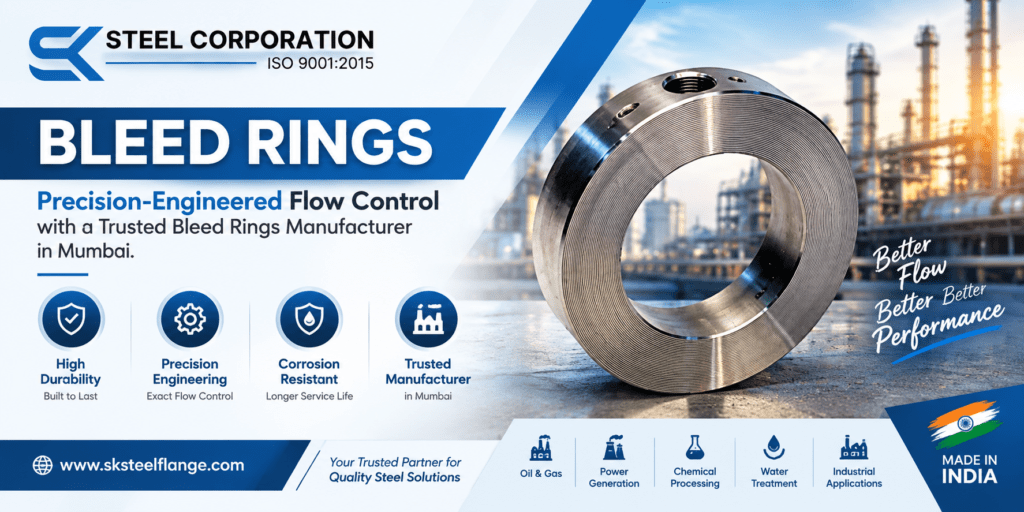
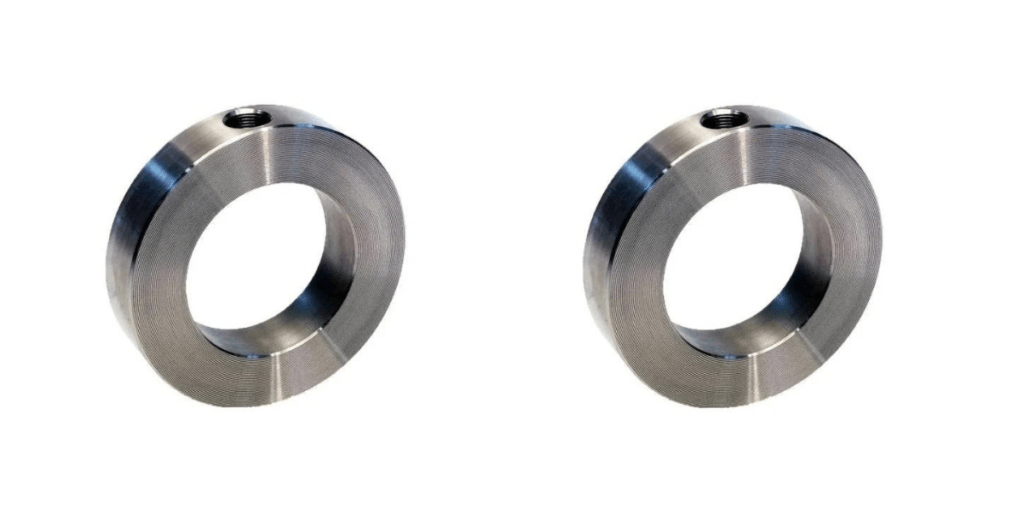
Bleed rings are specially designed ring-shaped piping components installed between flanges in a piping system. They generally include one or more ports that can be used for draining, venting, sampling, pressure measurement, or other process requirements.
These rings can be useful in systems where operators need access to the process fluid without completely dismantling the pipeline. Depending on the application, bleed rings can be manufactured with different port arrangements, dimensions, thicknesses, and materials. The selection of a suitable bleed ring depends on factors such as pipe size, pressure rating, temperature, fluid type, flange standard, and application requirements.
Importance of Quality Bleed Rings
Industrial piping systems often operate under pressure and demanding working conditions. Therefore, every component installed between pipe sections needs to provide proper fitment and reliable performance.
- Proper connection between flanged components
- Convenient draining and venting
- Support for pressure measurement
- Easy process sampling
- Suitable dimensional accuracy
- Reliable performance in industrial environments
- Compatibility with different piping arrangements
- Reduced maintenance difficulties
For these reasons, industries should select products from an experienced Bleed Rings Manufacturer in Mumbai that understands industrial piping requirements. Bleed rings can also be used with pressure gauges, valves, and other instrumentation depending on the requirements of the piping system.
SK Steel Corporation – Bleed Rings Manufacturer in Mumbai
SK Steel Corporation provides industrial piping solutions for customers requiring dependable bleed rings. The company understands that different industries may have different requirements related to size, material, pressure class, dimensions, and connection type.
As a Bleed Rings Manufacturer in Mumbai, SK Steel Corporation focuses on producing and supplying products that are suitable for various industrial piping applications. The company emphasizes quality-oriented manufacturing and attention to customer specifications. Whether customers require standard products or specific configurations, the company can work according to the application requirements and available technical specifications.
Applications of Bleed Rings
1. Oil and Gas Industry
One of the major applications of bleed rings is in the oil and gas industry. Pipelines and processing systems often require controlled venting, draining, testing, and sampling points. A bleed ring can provide access to the pipeline through its tapped connection without requiring extensive modification of the piping system.
They can be used around valves, pipeline sections, process equipment, and flanged connections where operators need a convenient point for pressure release or process monitoring.
2. Petrochemical Plants
Petrochemical plants handle different chemicals, hydrocarbons, gases, and liquids under demanding operating conditions. Bleed rings can be installed in process piping to provide drain, vent, sampling, or chemical injection points.
Depending on the process medium, suitable materials such as stainless steel, carbon steel, duplex steel, or nickel alloys may be selected. Material selection should be based on pressure, temperature, corrosion conditions, and the process fluid.
3. Chemical Processing Plants
Chemical processing systems frequently require controlled access to process lines. Bleed rings can provide a practical connection for sampling fluids, releasing trapped gases, draining liquids, or injecting chemicals.
For corrosive services, manufacturers may supply rings in corrosion-resistant materials. Stainless steel and specialized alloys are commonly selected for applications where resistance to aggressive chemicals is important.
4. Power Generation Plants
Power plants contain extensive steam, condensate, cooling-water, fuel, and process piping systems. Bleed and drip rings can be used for draining condensate, venting trapped air or gases, and providing test connections.
In high-temperature services, the appropriate material and pressure rating are important considerations. Bleed rings are available in different material grades and pressure classes for specific operating requirements.
5. Pipeline Systems
Bleed rings are useful in pipeline systems where operators require additional access to the line. The radial tapping can be connected to a valve, plug, gauge, or other suitable device.
The orientation of the bleed-ring connection can be selected according to its intended function. A top-oriented connection can be used for venting trapped gas, while a bottom-oriented connection can support draining of accumulated liquid or condensate.
6. Water Treatment and Utility Systems
Water treatment plants, pumping stations, and utility networks can also use bleed rings. They can provide convenient drain and test points around flanged pipe connections.
Applications may include raw-water pipelines, treated-water systems, cooling-water lines, filtration systems, pumping equipment, and utility piping. Industry suppliers list water and utility systems among the applications for bleed and drip rings.
7. Chemical Injection Systems
Bleed rings can be designed with tapped connections that allow chemicals or other process fluids to be introduced into a pipeline. This can be useful for applications involving corrosion inhibitors, cleaning fluids, treatment chemicals, or purging media.
The exact connection type and material should be selected according to the chemical being handled and the operating conditions.
8. Sampling Applications
Process sampling is another important application. A suitable valve or sampling connection can be fitted to the tapped opening of the bleed ring, allowing operators to obtain samples from the process line.
This can help industries monitor process conditions, fluid quality, chemical concentration, and other operating parameters without dismantling the main flanged connection.
9. Draining and Condensate Removal
Bleed or drip rings can be positioned with a bottom connection for draining accumulated liquid or condensate. This is particularly useful in piping systems where unwanted liquid accumulation can affect operation.
Drip-ring configurations are specifically designed to provide a drainage point at the flange while maintaining an open flow path through the pipe.
10. Pressure Testing
During pipeline and piping-system testing, a bleed ring can provide a convenient connection for applying or monitoring test pressure.
This makes the component useful during commissioning, maintenance, inspection, and testing activities. The correct pressure class, material, tapping arrangement, and applicable piping standard should always be considered before installation.
11. Pharmaceutical and Process Industries
Pharmaceutical and other process industries require controlled, clean, and reliable piping systems. Stainless-steel bleed rings can be used where process sampling, draining, or venting points are required.
For such applications, manufacturers may offer stainless-steel materials and customized configurations according to process and hygiene requirements. Industry sources also identify pharmaceutical and process applications for bleed rings.
Benefits of Bleed Rings
1. Easy Venting of Pipelines
One of the major benefits of bleed rings is that they provide a convenient point for releasing trapped air, gas, or pressure from a pipeline. A suitable valve can be connected to the tapped opening, allowing controlled venting without opening the main flange connection. This is particularly useful during commissioning, maintenance, and shutdown procedures.
2. Efficient Drainage
Bleed rings can also be used for draining liquids, condensate, or other accumulated fluids from piping systems. When the tapping is positioned at the appropriate low point, liquid can be removed through a connected valve or plug. This helps maintenance teams empty sections of piping more conveniently.
3. Helps Improve Maintenance Safety
Opening a pressurized industrial pipeline can create significant safety concerns. A bleed ring provides a dedicated access point that can be used to release pressure and drain the line before maintenance personnel loosen the main flange. This can reduce the need to break the primary piping joint during certain maintenance activities.
4. Convenient Sampling Point
Many process industries need to collect samples of liquids or gases for quality control and process monitoring. A bleed ring can provide a suitable connection for sampling equipment. This allows operators to access the process line through a controlled connection rather than modifying the main pipe.
5. Chemical Injection
Bleed rings can be designed with suitable tapped connections for chemical injection. Depending on the application, chemicals, inhibitors, cleaning fluids, or purge media can be introduced through the connection. This makes the component useful in chemical processing, oil and gas, petrochemical, and other process industries.
6. Full-Bore Flow
A major advantage of an open-bore bleed ring is that its central opening can match the pipe bore. Therefore, the ring can remain installed while allowing the process fluid to pass through the main pipeline without the type of restriction associated with a solid obstruction.
7. Easy Instrument Connection
Bleed rings can provide a convenient location for connecting gauges, sensors, valves, or other instruments. This makes them useful where operators need access to the process without installing a separate branch connection on the main pipeline.
8. Reduces Piping Modification
Installing a bleed ring between existing flange connections can provide an access point without necessarily requiring a welded branch connection to the pipe. This can simplify certain piping arrangements and upgrades, although the final design should always be checked by a qualified piping engineer.
9. Different Material Options
Bleed rings can be manufactured from different materials according to the operating environment. Common options include carbon steel, stainless steel, duplex stainless steel, nickel alloys, and other specialty materials. Material selection depends on factors such as process fluid, pressure, temperature, corrosion conditions, and applicable specifications.
10. Suitable for Different Flange Facings
Depending on the piping requirement, bleed rings can be produced for different flange arrangements and facings, including Flat Face (FF), Raised Face (RF), and Ring Type Joint (RTJ) configurations. Correct matching of the ring to the mating flange is important for proper installation and sealing.
11. Compact and Practical Design
Bleed rings have a relatively simple ring-shaped construction. They can be installed between suitable flanges while providing additional functionality through their tapped connections. This compact design makes them useful where space and piping modifications need to be carefully considered.
12. Customized Manufacturing
A professional Bleed Rings Manufacturer in Mumbai can manufacture rings according to required size, pressure class, material, flange facing, tapping size, tapping orientation, and drawing specifications. Custom manufacturing is particularly useful for specialized piping projects where standard configurations may not meet the exact requirement.
Why Choose SK Steel Corporation
1. High-Quality Manufacturing
A reliable Bleed Rings Manufacturer in Mumbai focuses on using suitable raw materials and controlled manufacturing processes. Quality materials help the rings withstand pressure, temperature, corrosion, and demanding industrial conditions. Manufacturers may offer carbon steel, stainless steel, alloy steel, duplex, super duplex, nickel alloys, and other materials according to the application.
2. Precision Dimensions
Accurate dimensions are essential because bleed rings are installed between mating flanges. Proper machining helps ensure correct alignment, gasket seating, and installation. Bleed rings can be manufactured to matching flange standards or customer drawings, including requirements for ring size, pressure class, facing, material, and tapping arrangement.
3. Different Flange Facings
Industrial piping systems can have different flange configurations. A professional manufacturer can provide bleed rings suitable for requirements such as Flat Face (FF), Raised Face (RF), and Ring Type Joint (RTJ). Selecting the appropriate facing helps achieve compatibility with the existing piping arrangement.
4. Suitable for Different Applications
Bleed rings are useful across many industries. They can provide points for venting trapped gases, draining liquids, pressure testing, chemical injection, sampling, and instrument connections. These functions make them useful in oil and gas, petrochemical, chemical processing, power generation, water treatment, marine, pharmaceutical, and other process industries.
5. Wide Material Selection
Different fluids and operating environments require different materials. A capable Bleed Rings Manufacturer in Mumbai can help customers select an appropriate grade according to pressure, temperature, corrosion conditions, and process media. Common choices include stainless steel grades such as 304 and 316, carbon steel, alloy steel, duplex materials, and nickel alloys.
6. Customized Solutions
Every piping system may have different requirements. Some applications require a single tapping, while others may require multiple radial tappings for separate venting and draining functions. Manufacturers can produce customized bleed rings according to customer drawings and specified tapping sizes and locations.
7. Support for Pressure Applications
Bleed rings are available for a broad range of pressure classes depending on the manufacturer’s design and applicable standard. Selecting the correct pressure rating and material is essential for safe and dependable service. Manufacturers serving industrial customers can help match the ring with the required piping and flange specifications.
8. Better Maintenance and Process Access
One of the major benefits of a bleed ring is that it provides access to the pipe through a tapped connection while maintaining an open bore. This can make venting, draining, testing, sampling, and injection operations more convenient compared with dismantling a flanged connection for every such requirement.
9. Quality Inspection and Documentation
For industrial projects, customers often require material and quality documentation. Depending on the manufacturer and project requirements, bleed rings can be supplied with material test certificates and inspection documentation. Some suppliers also offer third-party inspection and additional testing when specified by the customer.
10. Competitive Industrial Supply
Buying directly from a manufacturer can simplify communication regarding specifications, materials, drawings, quantities, and customization. It can also make it easier to coordinate production and documentation for project-based requirements. The final price, however, depends on factors such as material grade, size, pressure class, machining, quantity, testing, and customization.
Types of Bleed Rings
1. Raised Face Bleed Rings
Raised Face (RF) bleed rings are among the commonly used designs for industrial piping systems. They are manufactured to match raised-face flanges and provide a reliable gasket seating arrangement.
RF bleed rings can be supplied in different sizes and pressure classes. They are suitable for applications where standard raised-face flange connections are used, including oil and gas, petrochemical, chemical processing, power generation, and general industrial piping.
2. Flat Face Bleed Rings
Flat Face (FF) bleed rings are designed for piping systems using flat-face flange connections. Their flat mating surface allows them to be installed with compatible flat-face flanges and gaskets.
These rings are useful where minimizing concentrated bolt loading is important. The exact dimensions, material, and pressure rating should be selected according to the connected flange and piping requirements.
3. Ring Type Joint Bleed Rings
Ring Type Joint (RTJ) bleed rings are designed for demanding high-pressure and high-temperature piping applications. They incorporate a machined groove to accommodate a metallic ring gasket.
RTJ bleed rings are commonly considered for critical applications where a robust, leak-resistant flange connection is required. They are available in various materials and pressure classes depending on the service requirements.
4. Vent Rings
Vent rings are used when air, gas, or vapor needs to be released from a piping section. The tapped port provides an accessible point for connecting a valve or venting arrangement.
Proper venting can be important during commissioning, maintenance, flushing, or draining operations. Depending on the application, the ring can be manufactured with the required port size and location.
5. Sampling Bleed Rings
Some industrial processes require periodic collection of fluid samples. Sampling bleed rings provide a convenient connection point for this purpose.
A valve or sampling fitting can be connected to the tapped port. Operators can then take samples without dismantling the complete flange assembly. This can be useful in chemical processing, petroleum, oil and gas, pharmaceutical, and other process industries.
Conclusion
Bleed rings are useful components for many industrial piping systems because they can provide convenient access for draining, venting, sampling, and monitoring. Their quality and dimensional accuracy are important for achieving proper fitment and dependable performance.
SK Steel Corporation provides industrial plumbing solutions with an emphasis on quality, customer requirements, and dependable supply for companies looking for a Bleed Rings Manufacturer in Mumbai. The business can meet the needs of clients in a variety of industrial sectors with appropriate material choices, diverse configurations, and application-focused solutions.